VIDAR 5 MP
Vehicle video capture
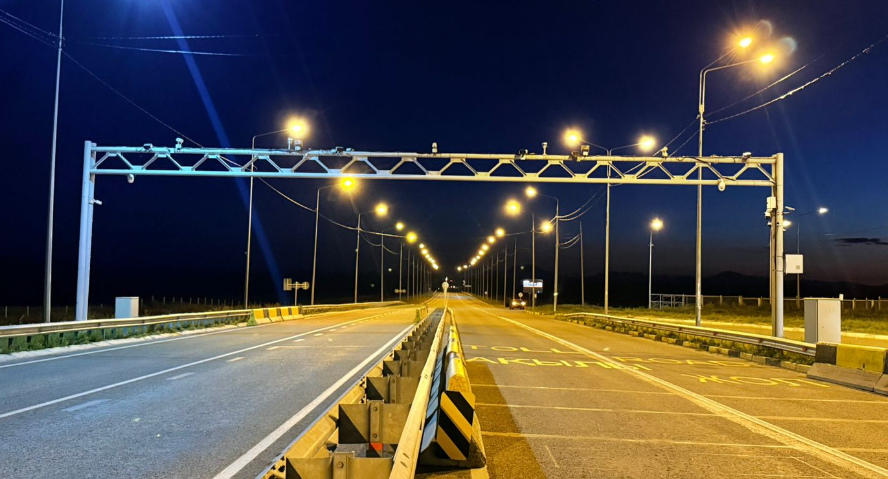
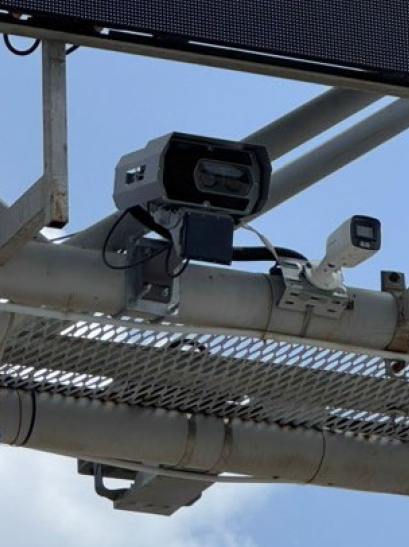
Adaptive Recognition VIDAR 5 MP cameras capture an image of the vehicle and its registration number in the control zone.

Intelligent transport systems
Road safety
Asia Great designs and implements automated traffic control systems based on Adaptive Recognition equipment. The system combines VIDAR 5 MP video cameras, a high-precision speed-measurement radar, vehicle registration number recognition and the Enforcement system for detecting, recording and processing traffic violations.
The system automatically records the vehicle, measures speed, recognises the registration number, compiles the event record and transmits the data to the customer's information systems.
Vehicle video capture
Adaptive Recognition VIDAR 5 MP cameras capture an image of the vehicle and its registration number in the control zone.
Instantaneous speed measurement
Vehicle speed is measured by a dedicated radar based on the Doppler effect. The measurement is synchronised with the vehicle image and the recognised registration number.
Registration number recognition
The system automatically recognises the vehicle registration number and links it to the measured speed, time, location and photographic evidence.
Violation detection and recording
Enforcement combines camera, radar and ANPR data into a single control event and compiles the recorded violation evidence.
Speed enforcement cameras, radar and ANPR operate as a single loop: from the moment the vehicle enters the zone until the data is transmitted to the customer's information systems.
In Asia Great systems, instantaneous speed measurement is based on a radar method using the Doppler effect. The radar determines the speed of a moving vehicle directly from the reflected radio signal and does not calculate it from a sequence of video frames alone.
This approach is particularly important on highways, toll sections and national roads, where stable measurement is required at high vehicle speeds.
Unlike purely optical speed determination, the radar method depends far less on lighting, image quality, camera perspective and video-tracking results. The camera performs a different essential task: identifying the vehicle and compiling photographic evidence.
The radar measures. VIDAR sees and identifies.
The system supports two vehicle speed measurement modes: instantaneous speed at the control point and average speed on a section between two points.
The radar measures vehicle speed directly in the control zone. The result is linked to the recognised registration number, a photograph of the vehicle, and the time and location of the event.
Average speed is determined from the time a vehicle takes to travel between two control points a known distance apart. The vehicle is identified at both points by its registration number.
Enforcement combines the speed measurement, video camera data and recognised registration number into a single control event.
The composition of the record depends on the station configuration and the type of detected violation, including speeding.
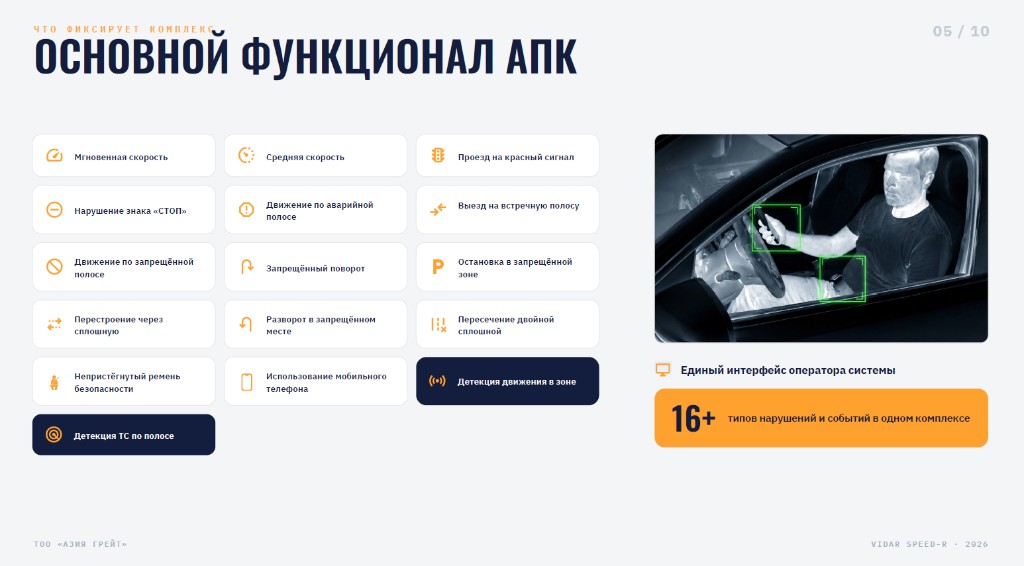
Asia Great systems are integrated with the information systems of government authorities and customers. They can receive measurement results, the recognised registration number, vehicle data, the time and location of detection, and supporting photo and video evidence.
In this way, the system operates as part of the overall automated enforcement infrastructure, not as a standalone camera or measuring instrument.
ЕРАП
Unified Register of Administrative Proceedings
The Enforcement system compiles the recorded violation evidence and transmits the data required for subsequent administrative proceedings in government information systems.
Integration automates the path from event detection and recording through preparation of the administrative case file to subsequent notification of the vehicle owner.
150+
VIDAR systems
Asia Great traffic control systems are deployed on national, regional and toll roads in Kazakhstan.
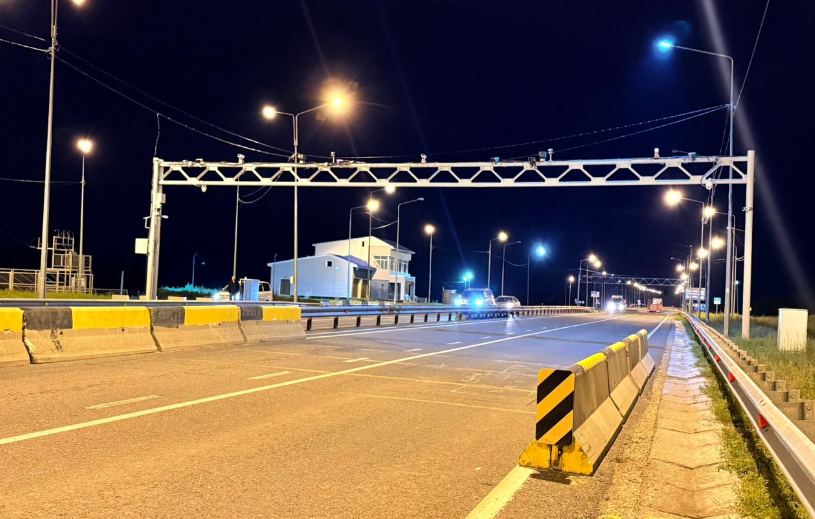
Asia Great carries out the full scope of work and adapts the system to the specific site, road infrastructure and the customer's information systems.
Send a technical brief, control-section requirements or a specification. Asia Great will propose an automated speed enforcement system configuration for the specific site.